For any active person, whether you're a dedicated runner, a weekend football player, or a regular at the gym, there are few things more frustrating than a sudden injury. That sharp twinge in the back of your thigh—the classic hamstring strain—can bring your training to a grinding halt. It’s not just the physical pain; it's the frustration of being sidelined, the uncertainty of recovery time, and the fear that you might not get back to the activities you love. Understanding the nature of your injury is the first, most crucial step toward a safe and speedy return to form.

Understanding the Injury - The 3 Grades of Hamstring Strains
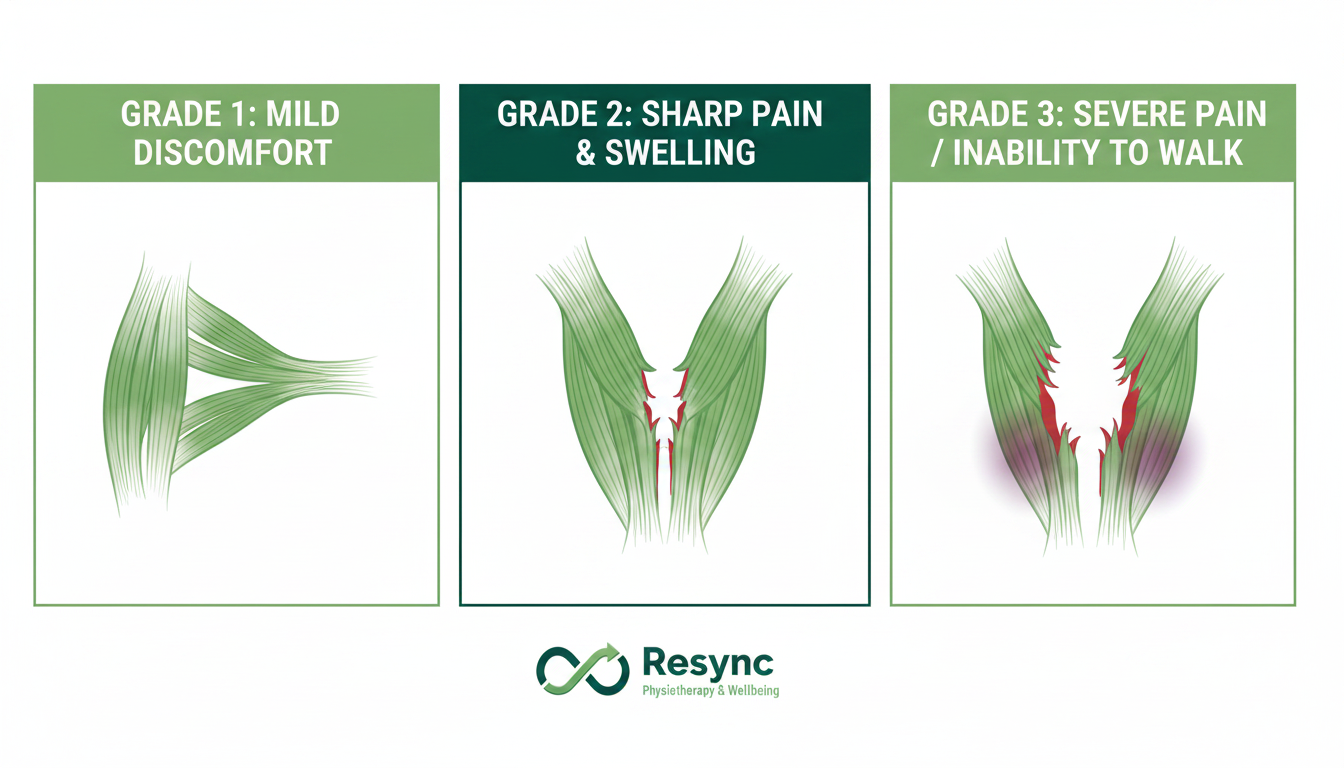
Not all hamstring injuries are created equal. The term "pulled hamstring" can describe anything from a minor annoyance to a severe, debilitating injury. In physiotherapy, we classify these strains into three distinct grades to determine the severity and create an effective treatment plan.
**Grade 1 (Mild):** This is a mild muscle pull or strain. You might feel a dull ache or tightness in the back of your thigh, but you can likely still walk without a significant limp. It feels more like an overstretch, with discomfort increasing when you try to straighten your leg or during activity.
**Grade 2 (Moderate):** This involves a partial tear of one or more of the hamstring muscles. The onset of pain is often more sudden and sharp, and you may have been forced to stop your activity immediately. Walking will likely be painful, and you might notice some swelling or even mild bruising after a day or two.
**Grade 3 (Severe):** This is a complete tear or rupture of the muscle. The pain is severe, immediate, and you may have heard or felt a "pop" at the moment of injury. You will find it very difficult, if not impossible, to walk without assistance. Significant swelling and bruising will typically appear within a few hours.
The First 48 Hours - What to Do Immediately After the Injury
Your first actions after an injury can significantly impact your recovery timeline. For years, the standard advice has been R.I.C.E. (Rest, Ice, Compression, Elevation). While these steps can help manage initial pain and swelling, they are only part of the picture. The single most important goal in the first 48 hours is to get an accurate diagnosis. Simply resting a Grade 2 or 3 tear without a clear plan can lead to improper healing, scar tissue formation, and a much higher risk of re-injury down the line. While initial self-care is helpful, it's no substitute for expert assessment to understand exactly what you're dealing with.
Red Flags - When You Absolutely Must See a Physiotherapist
While any persistent pain warrants a professional opinion, certain signs indicate that your hamstring injury requires immediate expert attention. Don't delay seeking help if you experience any of the following:
You heard or felt a distinct **'popping' or snapping sensation** at the time of injury.
There is **significant bruising** appearing on the back of your thigh, calf, or even ankle.
You are **unable to bear weight** on the injured leg or walk without a severe limp.
The pain is severe and does not subside with rest.
You notice a **visible gap or lump** in the muscle on the back of your thigh.
These symptoms can be indicative of a Grade 3 tear or other serious complications. Ignoring them can lead to long-term weakness and chronic issues, jeopardising your ability to perform at your best.
Your Comeback Starts with Clarity
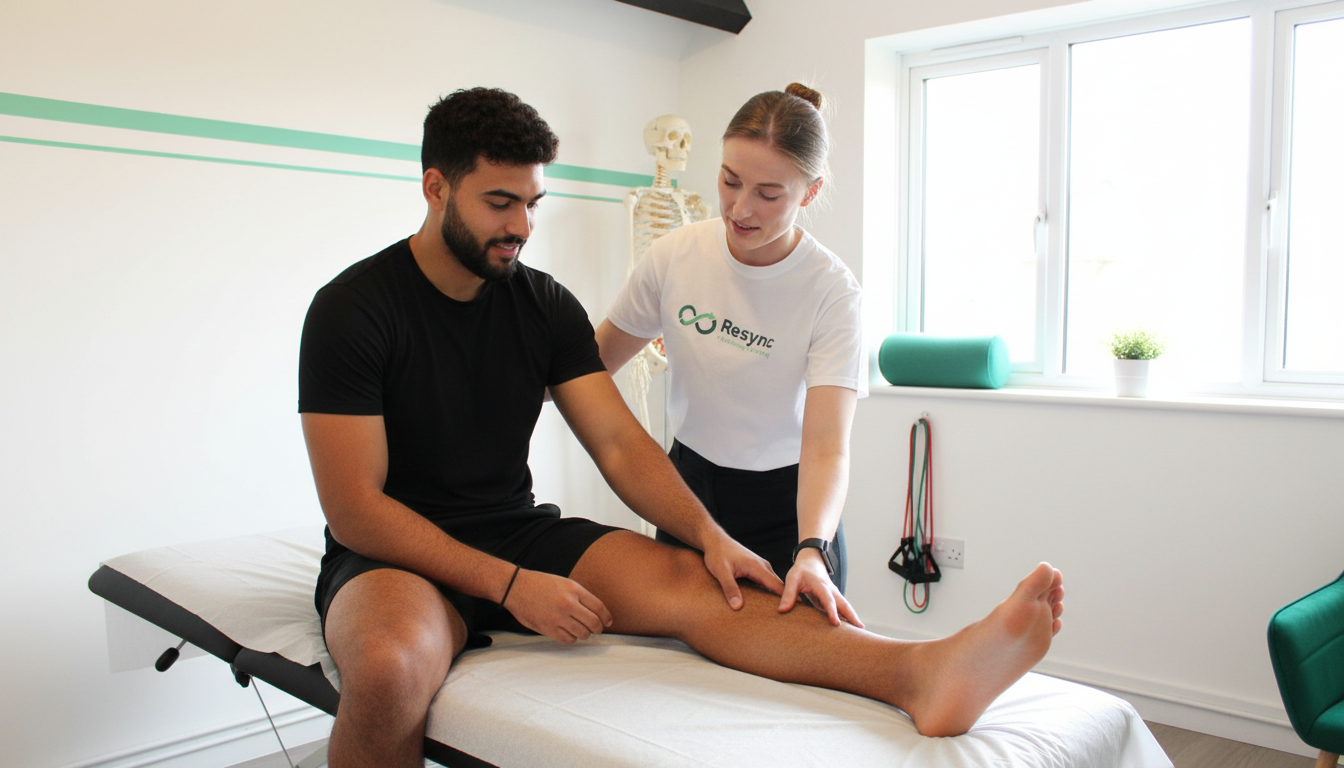
Leaving your recovery to guesswork is a strategy that rarely pays off for a dedicated athlete. Understanding whether you have a minor strain or a significant tear is the foundation of a successful rehabilitation program. A proper diagnosis dictates your treatment, your recovery timeline, and the specific exercises needed to rebuild strength and prevent re-injury. If you're an athlete in Balsall Common or Solihull dealing with a hamstring injury, our expert team can provide a clear diagnosis and a targeted, evidence-based treatment plan to get you back to peak performance, safely and effectively. Book your initial assessment with Resync Physiotherapy today and take the first confident step in your comeback story.