For any dedicated athlete, a sidelining injury is the ultimate frustration. Whether you're a runner pounding the pavements of Solihull, a footballer on a local league pitch, or a weekend warrior, the best way to deal with an injury is to prevent it from ever happening. This is where 'pre-hab' comes in—a proactive approach to conditioning your body to withstand the demands of your sport. Think of it as your secret weapon for staying in the game, building resilience, and unlocking your true performance potential.
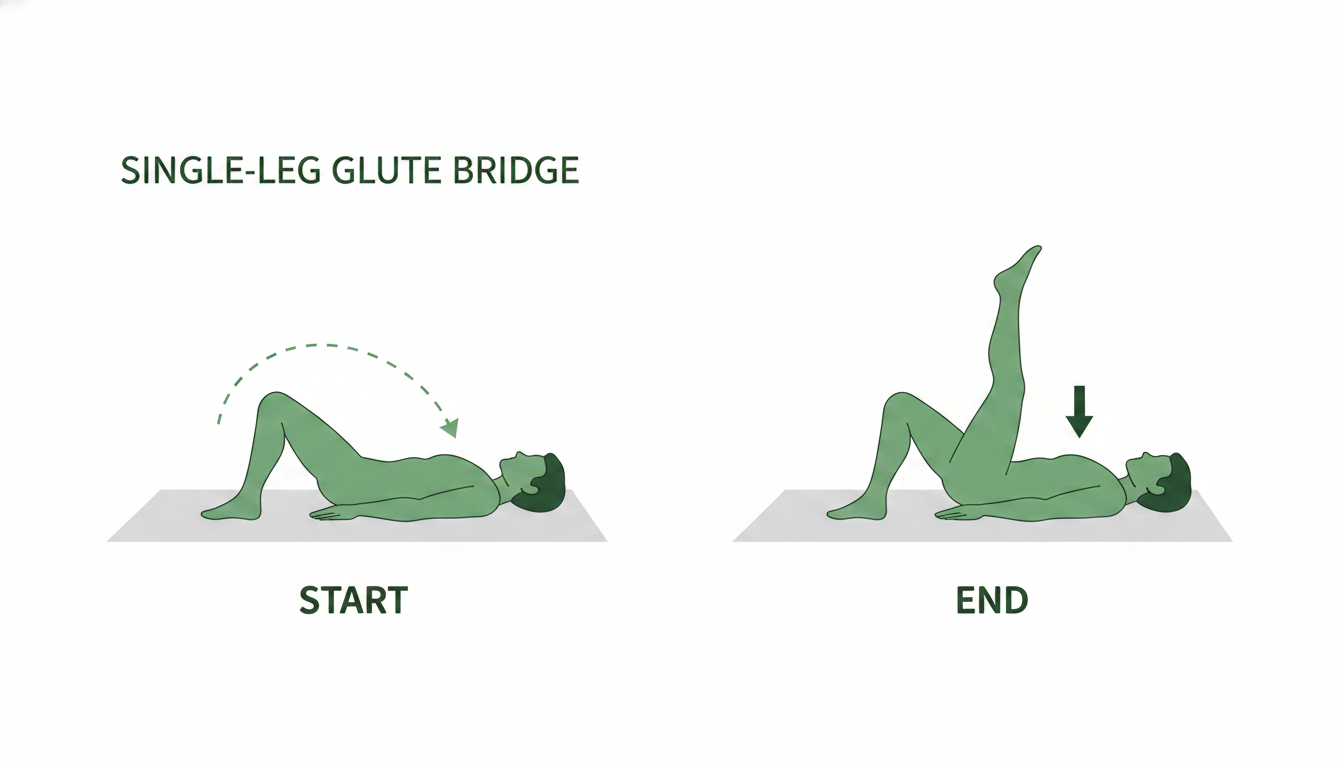
How-To 1: The Single-Leg Glute Bridge
Weak glutes and hamstrings are a leading cause of strains and lower back pain, especially in activities that involve explosive movements like sprinting and kicking. The Single-Leg Glute Bridge is a powerhouse exercise that isolates and strengthens these crucial muscles, building a solid foundation for power and protecting your posterior chain.
Here's how to perform it correctly:
Lie on your back with your knees bent and feet flat on the floor, hip-width apart. Extend one leg straight out.
Engage your core and squeeze the glute of your supporting leg to lift your hips off the floor until your body forms a straight line from your shoulders to your knee.
Hold for a count of three at the top, focusing on keeping your hips level.
Slowly lower your hips back to the starting position with control.
Complete 10-12 repetitions on one side before switching to the other.
Pro-Tip: Avoid arching your lower back. The movement should come from your hips and glutes, not your spine.
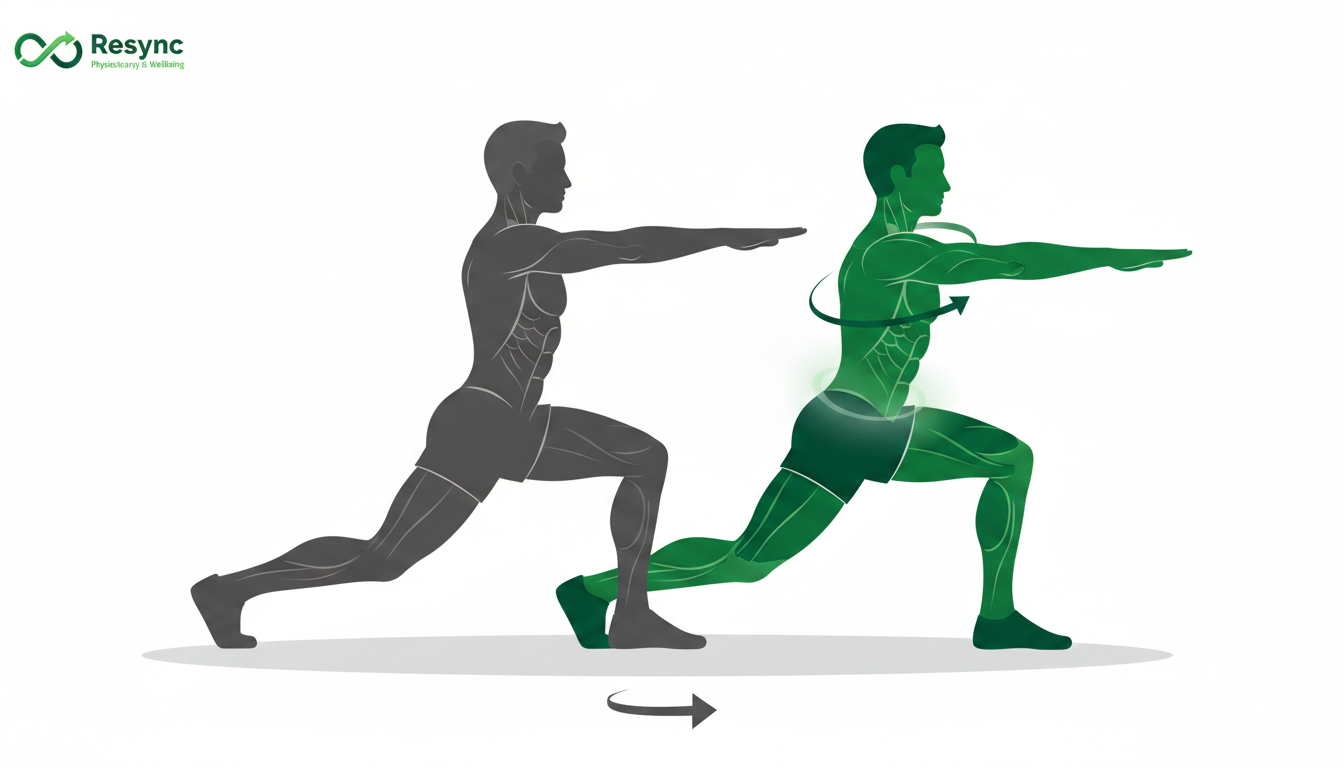
How-To 2: The Lunge with Trunk Rotation
Athletic performance is rarely about moving in a straight line. Sports require dynamic stability, agility, and the ability to change direction safely. The Lunge with Trunk Rotation is a fantastic exercise that enhances hip mobility, challenges your balance, and strengthens the core muscles that stabilise your spine. This integrated movement helps reduce stress on your knees and lower back during twisting and turning actions.
Follow these steps for perfect form:
Step forward into a lunge position, keeping your front knee aligned over your ankle and your back knee hovering just above the ground.
Once stable in the lunge, slowly rotate your torso and arms towards the side of your front leg.
Focus on rotating from your upper back, keeping your core engaged and your hips facing forward.
Rotate back to the centre with control.
Push off your front foot to return to a standing position.
Repeat for 8-10 repetitions on each side.
How-To 3: The Plank with Shoulder Taps
The core is the epicentre of all athletic movement. A strong, stable core transfers energy efficiently through your body, improves balance, and protects your spine from injury. The Plank with Shoulder Taps takes the classic plank a step further by introducing an element of instability, forcing your deep core muscles to work harder to prevent your hips from rotating. This is fundamental for any athlete in any sport.
Here’s how to master it:
Start in a high plank position, with your hands directly under your shoulders and your feet hip-width apart. Your body should form a straight line from head to heels.
Brace your core and keep your hips as still as possible.
Slowly lift one hand off the floor and tap the opposite shoulder.
Return your hand to the floor with control, and then repeat on the other side.
Continue alternating taps for 30-45 seconds, focusing on minimising any rocking or swaying.
Your Next Move: From Pre-hab to Peak Performance
Incorporating these three exercises into your warm-up or cool-down routine is a significant step towards building a more resilient, injury-proof body. Just a few minutes of consistent pre-hab work can save you weeks, or even months, of frustrating time on the sidelines. Remember, consistency is key to reaping the rewards. While these movements provide a great foundation, every athlete's body is unique. For a plan that is truly tailored to your specific goals, sport, and movement patterns, professional guidance is invaluable. We can help you identify your unique areas of weakness and create a personalised pre-hab program to bulletproof your body and keep you performing at your best.
If you're ready to take a proactive step towards injury-free performance, let's talk. We invite you to book an initial assessment at our Balsall Common clinic. Together, we'll build a clear path to help you recover, move, and perform with confidence. Book your appointment today and start your journey towards a stronger, more resilient you.